
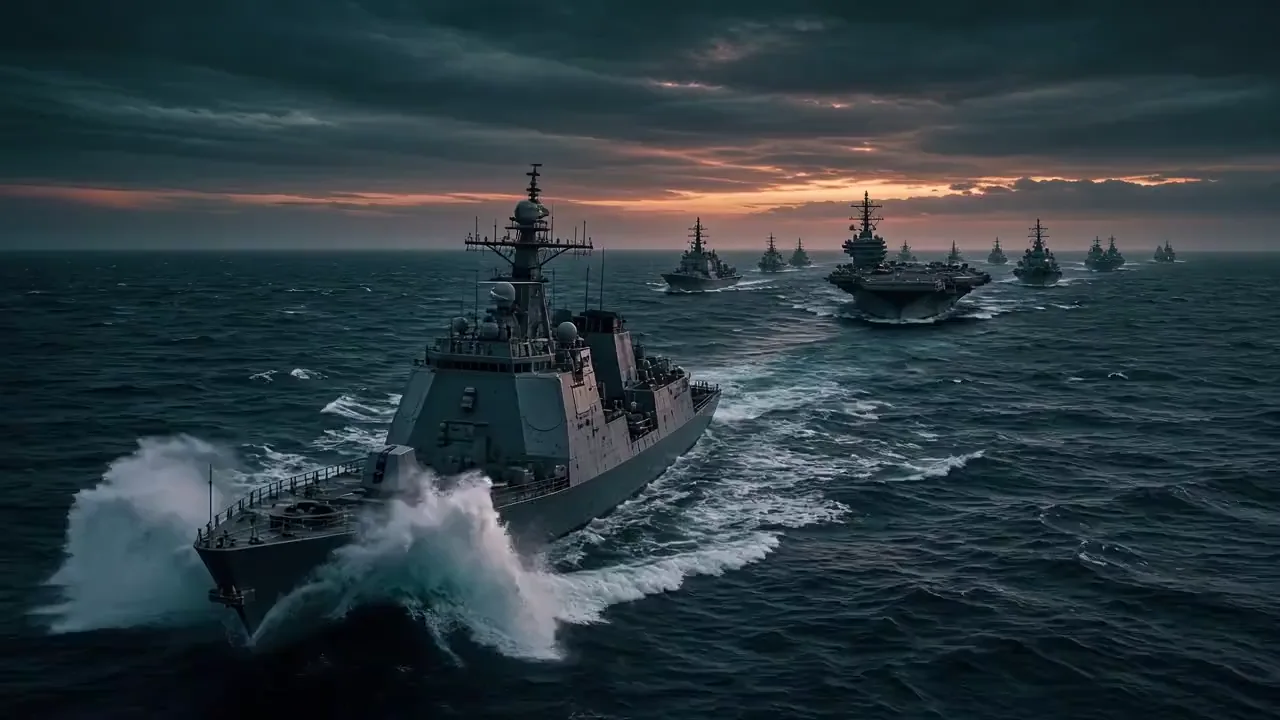
Wasp class
Country:  United StatesManufacturer: Huntington Ingalls Industries
Lead ship USS Wasp (LHD-1) was commissioned on July 29, 1989, with 8 ships built through 2009 (7 active following the 2020 pier-side fire loss of USS Bonhomme Richard, LHD-6).
History and reference table supplied by the editor; not independently verified. Supplied figures fill the specification fields as written, including ranges and estimates where given. Existing baseline values are unchanged; unknown numeric fields remain blank.
Community
Identity6 fields
- Designation
- Wasp class
- Manufacturer
- Huntington Ingalls Industries
- Country
- United States
- Category
- Amphibious assault ship
- Role
- Multipurpose Amphibious Assault Ship / Helicopter & STOVL Carrier (LHD)
Production & service4 fields
- Introduced
- 1989
- Service entry
- July 1989 (USS Wasp, LHD-1; 8 ships commissioned 1989–2009; 7 active)
- Status
- In service
- Units produced
- 8
Specifications11 fields
- Full-load displacement
- 40,500–41,335 tonnes (full load)
- Crew
- ~1,070–1,208 ship's company + ~1,687–1,894 embarked Marines (plus 64-bed hospital / 6 operating rooms)
- Length
- 257.3 m
- Beam
- 31.8 m
- Draught
- 8.1 m
Data trust
- Reliability
- Unverified
- Sources
- Editor-supplied reference: naval systems batch 4 kuznetsov class ticonderoga class type 052d los angeles class soryu class wasp class
Historical profile
Origins: Multi-Purpose Expeditionary Air-Sea Assault (1985–1989): Designed and constructed by Ingalls Shipbuilding in Pascagoula, Mississippi, as an enlarged, capability-expanded evolution of the Tarawa-class (LHA) amphibious assault ships, the Wasp-class (LHD) multipurpose amphibious assault ships were engineered to simultaneously deploy a full U.S. Marine Expeditionary Unit (MEU) via both vertical air assault (helicopters/tiltrotors) and surface landing craft from an internal floodable well deck. Lead ship USS Wasp (LHD-1) was commissioned on July 29, 1989, with 8 ships built through 2009 (7 active following the 2020 pier-side fire loss of USS Bonhomme Richard, LHD-6).
Well Deck, Gas-Turbine Transition, and "Lightning Carrier" Conversion: Steam to Gas-Turbine Propulsion (LHD-8 Makin Island): While the first seven hulls utilized oil-fired steam boilers, the final ship—USS Makin Island (LHD-8), commissioned in 2009—introduced a CODLOG hybrid gas-turbine/electric propulsion system (two GE LM2500+ gas turbines plus electric auxiliary propulsion motors), saving over $250 million in fuel costs over its service life and serving as the propulsion baseline for the follow-on America-class (LHA-6) ships. F-35B "Lightning Carrier" Concept: Originally operating AV-8B Harrier II jump jets and CH-46/CH-53 helicopters, Wasp-class flight decks and decks/hangars were modified to operate MV-22B Osprey tiltrotors and F-35B Lightning II fifth-generation stealth fighters—enabling each ship to deploy with up to 16–20 F-35Bs as a dedicated light aircraft carrier when required.
Ships & variants
| Name | Pennant | Operator | Builder | Laid down | Launched | Commissioned / delivered | Status | Batch / variant |
|---|---|---|---|---|---|---|---|---|
| Wasp class; steam-powered LHD-1 to LHD-7 and hybrid LHD-8 distinguished | — | — | — | — | — | — | — | — |
Programme / unit cost: —
Rows come from the variants already documented on this page; dates, pennants and builders are shown as — until a sourced hull list is added.
