
Richelieu class
Country:  FranceManufacturer: Arsenal de Brest; Ateliers et Chantiers de Saint-Nazaire Penhoët
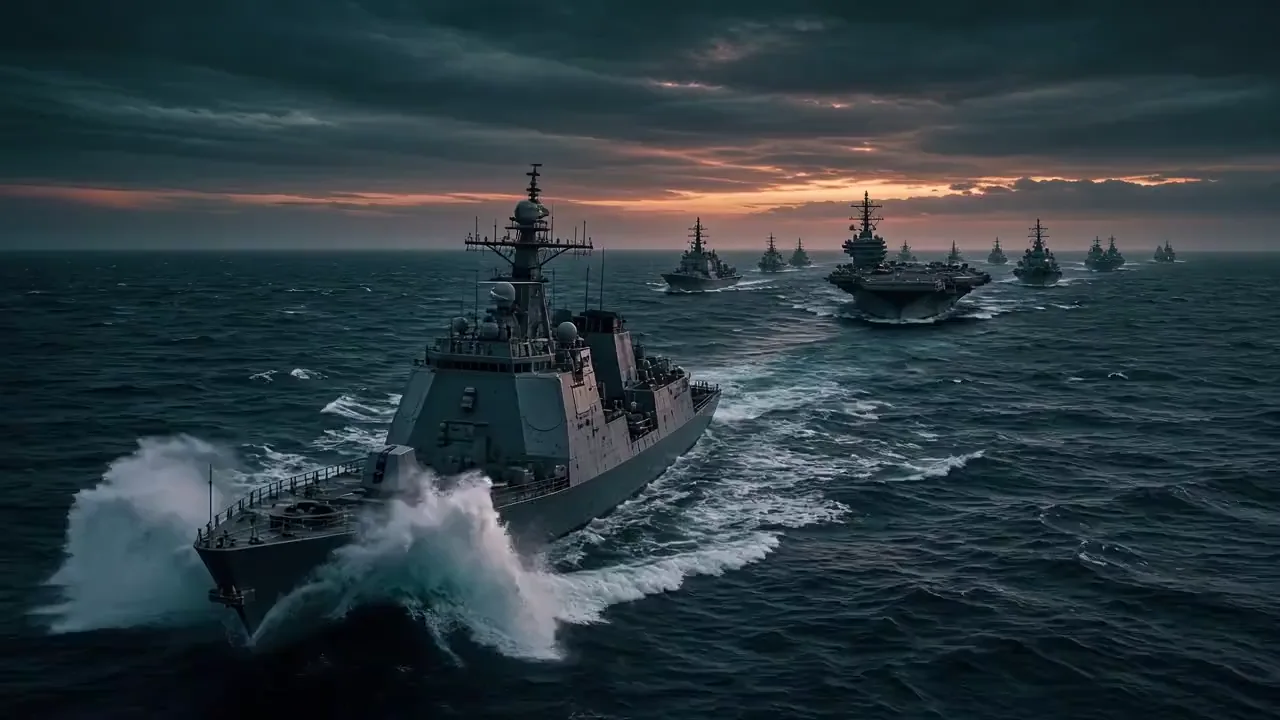
The Richelieu class were fast battleships built for the French Navy between the 1930s and 1950s. Initially two ships were ordered in 1935 in response to Italian orders for the Littorio -class battleships the previous year.
Data-only class record added 21 November 2026 (Batch 12 raw-data expansion). One page per class; individual ships appear only in Ships & variants. Illustration pending. Text adapted from Wikipedia (CC BY-SA 4.0).
Community
Identity6 fields
- Designation
- Richelieu class
- Country
- France
- Category
- Battleship / battlecruiser
- Role
- Fast battleship
Production & service5 fields
- Introduced
- 1940
- Service entry
- 1940–1970
- Status
- Decommissioned
- Units produced
- Built: 1935–1955 / Completed: 2 / Planned: 4
- Operators
- French Navy; Free French Navy
Specifications11 fields
- Full-load displacement
- 37,250 t
- Crew
- 1,569
- Length
- 247.85 m
- Beam
- 33.08 m
- Draught
- 9.9 m
Data trust
- Reliability
- Partially verified
- Sources
- Richelieu-class battleshipWikipedia · Accessed
- Last reviewed
- Confidence level
- Partial. Class figures transcribed from the cited Wikipedia article (infobox and ship list) on 21 November 2026; not independently audited.
Historical profile
The Richelieu s were based on the preceding Dunkerque class, but scaled up to accommodate more powerful 380 mm (15 in) guns and armor to protect them from guns of the same caliber. To keep the ships within the displacement limits imposed by the Washington Naval Treaty, they featured the same concentrated arrangement as the Dunkerque s for the main battery: two quadruple gun turrets placed forward. They also incorporated new, more compact boilers that allowed for a shorter hull (which required less heavy armor) for the desired top speed. After Germany ordered two Bismarck -class battleships, France responded with another pair of Richelieu s, to be built to modified designs. The first, Clemenceau, would have received modified secondary and anti-aircraft batteries, while Gascogne would have had her superfiring main battery turret shifted aft, along with other changes. Clemenceau was never completed, and Gascogne was never laid down.
Ships & variants
Hulls listed: 4 · In service: 0 · On order: 0
| Name | Pennant | Operator | Builder | Laid down | Launched | Commissioned / delivered | Status | Batch / variant |
|---|---|---|---|---|---|---|---|---|
| Armand-Jean du Plessis, Cardinal de Richelieu | — | — | Arsenal de Brest | 22 October 1935 | 17 January 1939 | 15 July 1940 (Vichy France); 10 October 1943 (Free French Forces) | — | — |
| Jean Bart | — | — | Chantiers de Penhoët, Saint-Nazaire | 12 December 1936 | 6 March 1940 | 1 May 1955 | — | — |
| Georges Clemenceau | — | — | Arsenal de Brest | 17 January 1939 | — N/a | — N/a | — | — |
| Gascony | — | — | Chantiers de Penhoët, Saint-Nazaire | — N/a | — N/a | — N/a | — | — |
Programme / unit cost: —
Variants
Related systems
ARSENALIS // Research desk
Dossier resources
Loading map…
Natural Earth · schematic bordersNo operator entries recorded for this selection.
No structured operator list recorded. Country of origin is not treated as an operator.
