
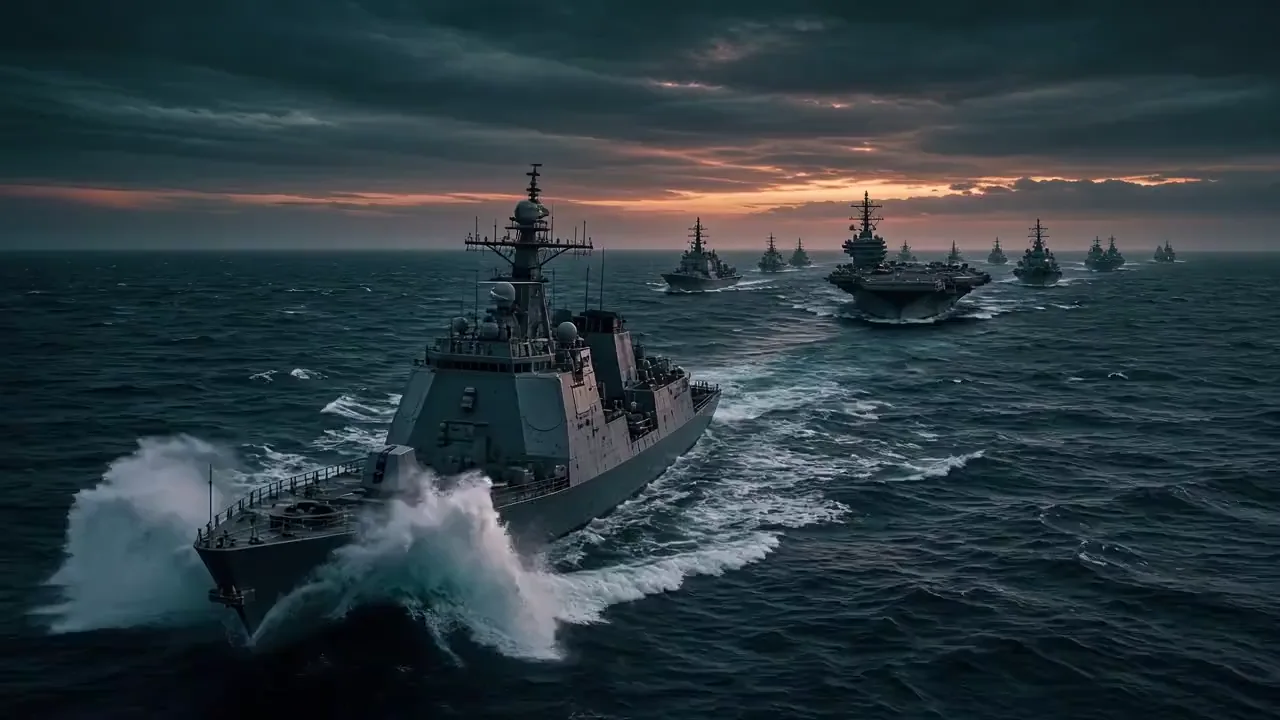
Kongō class (battlecruiser)
The Kongō -class battlecruiser was a class of four battlecruisers (later reclassified fast battleships) built for the Imperial Japanese Navy (IJN) immediately before World War I. Designed by British naval architect George Thurston, the lead ship of the class, Kongō, was the last Japanese capital ship constructed outside Japan, by Vickers at Barrow-in-Furness. Her sister ships, Haruna, Kirishima and Hiei, were all completed in Japan.
Data-only class record added 21 November 2026 (Batch 12 raw-data expansion). One page per class; individual ships appear only in Ships & variants. Illustration pending. Text adapted from Wikipedia (CC BY-SA 4.0).
Community
Identity6 fields
- Designation
- Kongō class (battlecruiser)
- Country
- Japan
- Category
- Battleship / battlecruiser
- Role
- Battlecruiser
Production & service5 fields
- Introduced
- 1913
- Service entry
- 1913–1945
- Status
- Decommissioned
- Units produced
- Built: 1911–1915 / Completed: 4 / Planned: 4 / Lost: 4
- Operators
- Imperial Japanese Navy
Specifications11 fields
- Full-load displacement
- 27,384 t
- Crew
- 1,193
- Length
- 214.58 m
- Beam
- 28.04 m
- Draught
- 8.22 m
Data trust
- Reliability
- Partially verified
- Sources
- Kongō-class battlecruiserWikipedia · Accessed
- Last reviewed
- Confidence level
- Partial. Class figures transcribed from the cited Wikipedia article (infobox and ship list) on 21 November 2026; not independently audited.
Historical profile
During the late 1920s, all but Hiei were reconstructed and reclassified as battleships. After the signing of the London Naval Treaty in 1930, Hiei was reconfigured as a training ship to avoid being scrapped. Following Japan's withdrawal from the treaty, all four underwent a massive second reconstruction in the late 1930s. Following the completion of these modifications, which increased top speeds to over 30 knots (56 km/h; 35 mph), all four were reclassified as fast battleships. The threat of the Kongō -class on American lines of communication and logistics leading up to World War II highly influenced the U.S. Navy 's decision to order the Iowa -class fast battleships. The Kongō -class battleships were the most active capital ships of the Japanese Navy during World War II, participating in most major engagements of the war.
Ships & variants
Hulls listed: 4 · In service: 0 · On order: 0
| Name | Pennant | Operator | Builder | Laid down | Launched | Commissioned / delivered | Status | Batch / variant |
|---|---|---|---|---|---|---|---|---|
| Kongō | — | — | Vickers, Barrow-in-Furness | 17 January 1911 | 18 May 1912 | — | DecommissionedTorpedoed and sunk by the submarine USS Sealion, 21 November 1944 | — |
| Hiei | — | — | Yokosuka Naval Arsenal, Yokosuka | 4 November 1911 | 21 November 1912 | — | DecommissionedCrippled by the heavy cruisers USS San Francisco and USS Portland. Scuttled following air attacks during the Naval Battle of Guadalcanal, … | — |
| Kirishima | — | — | Mitsubishi Shipyard Co., Nagasaki | 17 March 1912 | 1 December 1913 | — | DecommissionedSunk by the battleship USS Washington during the Naval Battle of Guadalcanal, 15 November 1942 | — |
| Haruna | — | — | Kawasaki Dockyard Co., Kobe | 16 March 1912 | 14 December 1913 | — | DecommissionedSunk in port by US aircraft, 28 July 1945; broken up from 1946 | — |
Programme / unit cost: —
Variants
Related systems
ARSENALIS // Research desk
Dossier resources
Loading map…
Natural Earth · schematic bordersNo operator entries recorded for this selection.
No structured operator list recorded. Country of origin is not treated as an operator.
