
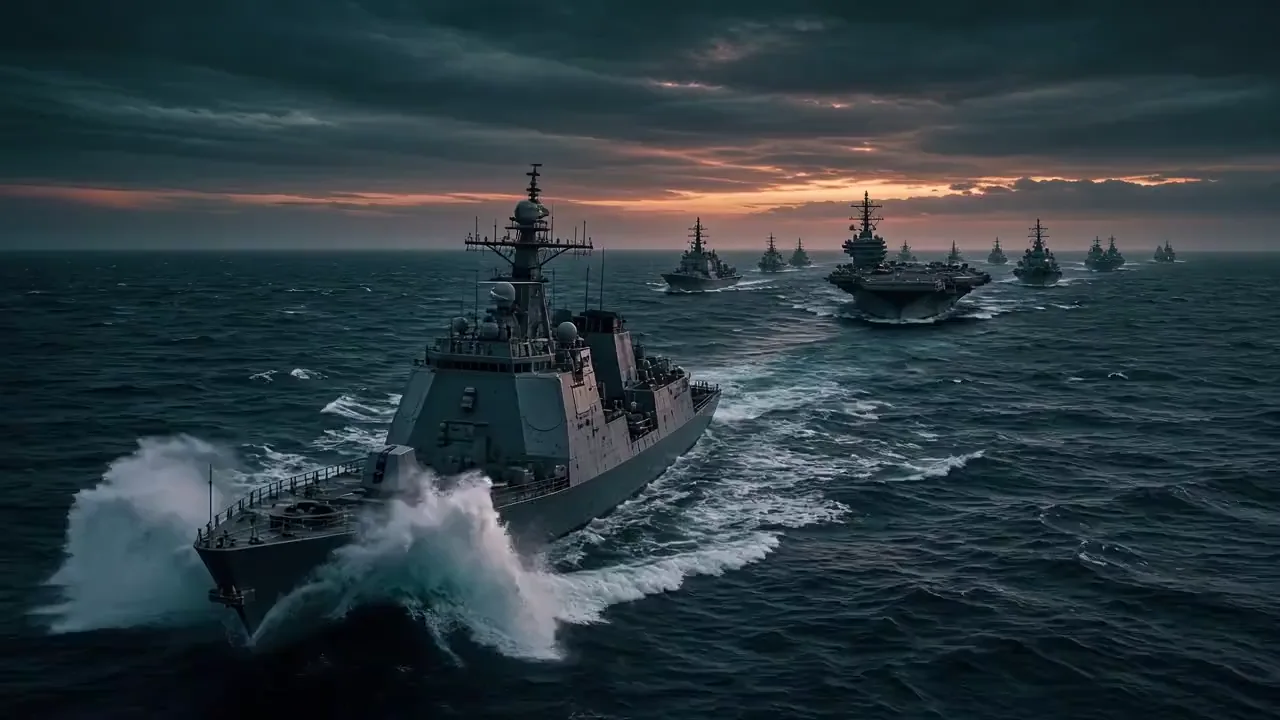
Bismarck class
Country:  GermanyManufacturer: Blohm & Voss (1); Kriegsmarinewerft Wilhelmshaven (1)
The Bismarck class was a pair of fast battleships built for Nazi Germany's Kriegsmarine shortly before the outbreak of World War II. The ships were the largest and most powerful warships built for the Kriegsmarine; displacing more than 41,000 metric tons (40,000 long tons) normally, they were armed with a battery of eight 38 cm (15 in) guns and were capable of a top speed of 30 knots (56 km/h; 35 mph). Bismarck was laid down in July 1936 and completed in September 1940, while the keel of her sister ship, Tirpitz, was laid in October 1936 and work finished in February 1941.
Data-only class record added 21 November 2026 (Batch 12 raw-data expansion). One page per class; individual ships appear only in Ships & variants. Illustration pending. Text adapted from Wikipedia (CC BY-SA 4.0).
Illustration: Bismarck class, reference configuration, photo-derived illustration
Community
Identity6 fields
- Designation
- Bismarck class
- Country
- Germany
- Category
- Battleship / battlecruiser
- Role
- Fast battleship
Production & service5 fields
- Introduced
- 1940
- Service entry
- 1940–1944
- Status
- Decommissioned
- Units produced
- Built: 1936–1941 / Completed: 2 / Lost: 2
- Operators
- Kriegsmarine
Specifications11 fields
- Full-load displacement
- 41,700 t
- Crew
- 103
- Length
- 241.6 m
- Beam
- 36 m
- Draught
- 9.3 m
Data trust
- Reliability
- Partially verified
- Sources
- Bismarck-class battleshipWikipedia · Accessed
- Last reviewed
- Confidence level
- Partial. Class figures transcribed from the cited Wikipedia article (infobox and ship list) on 21 November 2026; not independently audited.

Historical profile
The ships were ordered in response to the French Richelieu -class battleships, themselves laid down in response to the Italian Littorio -class battleships. The Bismarck class was designed with the traditional role of engaging enemy battleships in home waters in mind, though the Oberkommando der Marine (High Command of the Navy) envisioned employing the ships as long-range commerce raiders against British shipping in the Atlantic Ocean. As such, their design represented the strategic confusion that dominated German naval construction in the 1930s. Both ships had short service careers. Bismarck conducted only one operation, Operation Rheinübung, a sortie into the North Atlantic to raid supply convoys sent from North America to Great Britain. During the operation, she destroyed the British battlecruiser HMS Hood and damaged the new battleship Prince of Wales in the Battle of the Denmark Strait.
Ships & variants
Hulls listed: 2 · In service: 0 · On order: 0
| Name | Pennant | Operator | Builder | Laid down | Launched | Commissioned / delivered | Status | Batch / variant |
|---|---|---|---|---|---|---|---|---|
| Otto von Bismarck | — | — | Blohm & Voss,; Hamburg | 1 July 1936 | 14 February 1939 | 24 August 1940 | DecommissionedSunk following surface action, 27 May 1941 | — |
| Alfred von Tirpitz | — | — | Kriegsmarinewerft,; Wilhelmshaven | 2 November 1936 | 1 April 1939 | 25 February 1941 | DecommissionedSunk in air attack at Tromsø, 12 November 1944 | — |
Programme / unit cost: —
Variants
Related systems
ARSENALIS // Research desk
Dossier resources
Loading map…
Natural Earth · schematic bordersNo operator entries recorded for this selection.
No structured operator list recorded. Country of origin is not treated as an operator.
