Skyflash
Country:  United KingdomManufacturer: BAe Dynamics
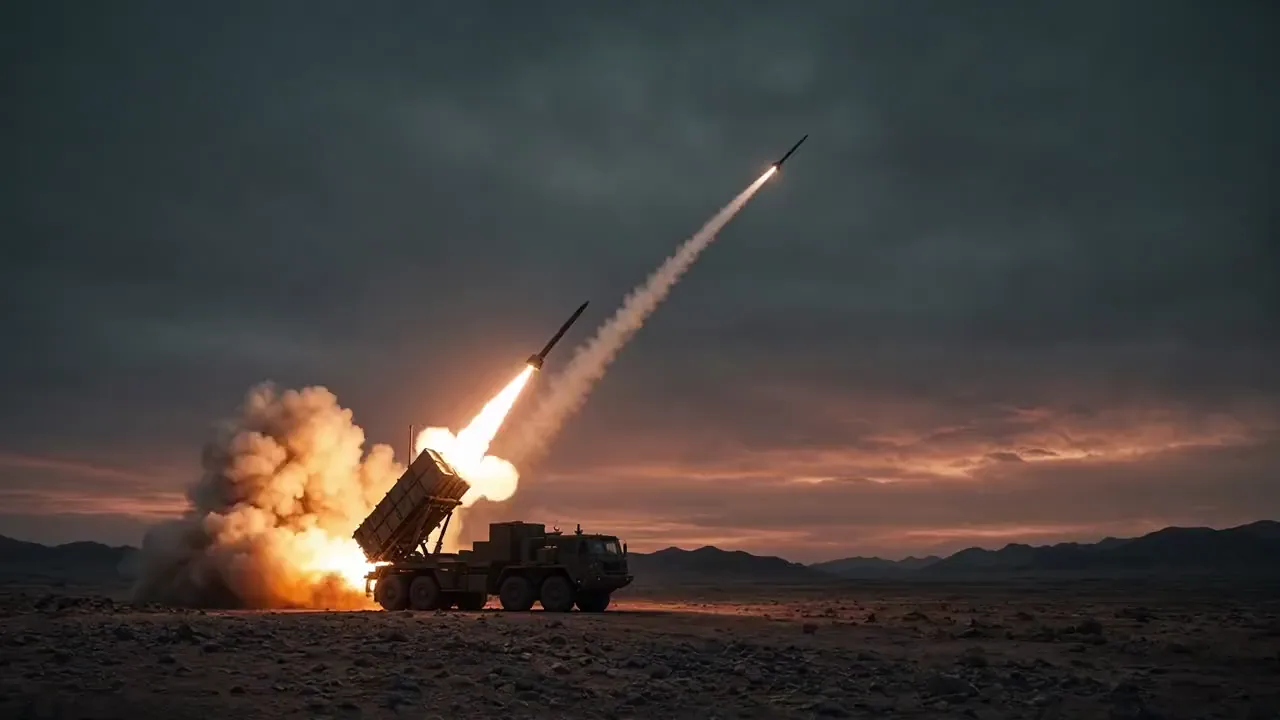
The Skyflash, or Sky Flash in marketing material, was a medium-range semi-active radar homing air-to-air missile derived from the US AIM-7 Sparrow missile and carried by Royal Air Force McDonnell Douglas F-4 Phantoms and Tornado F3s, Italian Aeronautica Militare and Royal Saudi Air Force Tornados and Swedish Flygvapnet Saab Viggens. Skyflash replaced the original Raytheon conical scanning seeker with a Marconi inverse monopulse seeker that worked with the F-4's radar.

The Skyflash, or Sky Flash in marketing material, was a medium-range semi-active radar homing air-to-air missile derived from the US AIM-7 Sparrow missile and carried by Royal Air Force McDonnell Douglas F-4 Phantoms and Tornado F3s, Italian Aeronautica Militare and Royal Saudi Air Force Tornados and Swedish Flygvapnet Saab Viggens. Skyflash replaced the original Raytheon conical scanning seeker with a Marconi inverse monopulse seeker that worked with the F-4's radar.
Community
Identity7 fields
- Designation
- Skyflash
- Manufacturer
- BAe Dynamics
- Country
- United Kingdom
- Year
- 1978
- Category
- Air-to-air (AAM)
Performance4 fields
- Range
- 45 km
- Top speed
- Mach 4 (3,069 mph, 4,939 kmh, 2,666 kn)
- Guidance
- Marconi inverse monopulse semi-active radar homing
- Warhead
- 39.5 kg (87 lb)
Physical characteristics5 fields
- Launch platform
- Not available
- Diameter
- 203 mm
- Propulsion
- Rocketdyne solid propellant rocket motor
- Length
- 3.68 m
- Launch weight
- 193 kg
Data trust
- Reliability
- Partially verified
- Sources
- SkyflashWikipedia · Accessed
- Last reviewed
- Confidence level
- Partial. Figures transcribed from the cited Wikipedia article (infobox and lead) on 25 November 2026; not independently audited. Unknown values are left empty and render as —.
History
Monopulse seekers are more accurate, less susceptible to jamming, and able to easily pick out targets at low altitudes. It offered significantly better performance than the original seeker, allowing British Aerospace to dispense with upgrades to the warhead that were carried out in the US to address poor accuracy. Skyflash was tested in the US, but after trials against experimental monopulse seekers from Raytheon, the United States Navy elected to order a different monopulse-equipped version of the Sparrow, the AIM-7M. Both Skyflash and the AIM-7M were later replaced by the more capable AMRAAM.
ARSENALIS // Research desk
Dossier resources
- Listed · status unspecified
- Active
- Retired
- On order / future
- —No quantity recorded
No structured operator list recorded. Country of origin is not treated as an operator.
Quantities are shown only when published in structured operator data; otherwise “—”. Individual service status is unspecified unless explicitly recorded.
Operator list sources
- attributed to Skyflash
Select a country on the map or in the table to see its entry and other catalogued systems listing it as an operator.