S-75 Dvina
Country: Soviet UnionManufacturer: Raspletin KB-1 ,; Grushin MKB Fakel (missile developer),; Lavochkin OKB (head developer)
The S-75 is a Soviet-designed, high-altitude air defence system. It is built around a surface-to-air missile with command guidance.
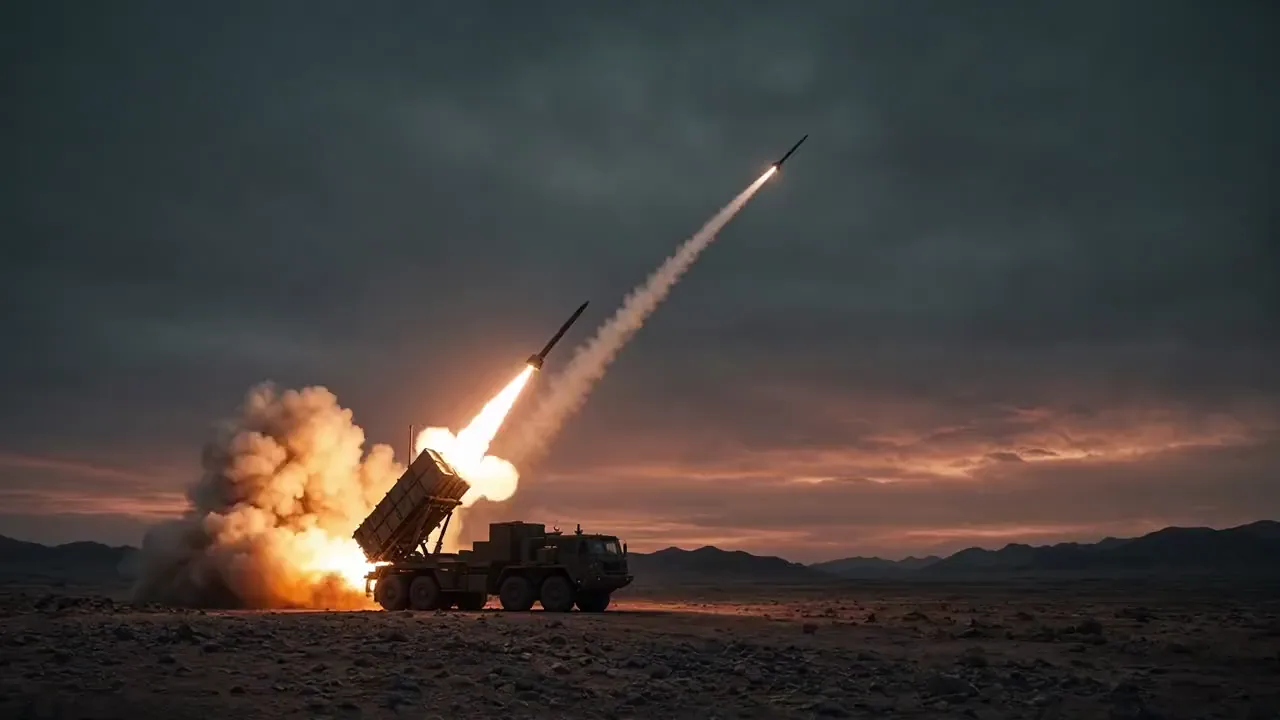
Illustration: S-75 Dvina — reference-photo illustration
Based on reference: https://commons.wikimedia.org/wiki/File:S-75_Dvina.jpg
The S-75 is a Soviet-designed, high-altitude air defence system. It is built around a surface-to-air missile with command guidance.
Community
Identity7 fields
- Designation
- S-75 Dvina
- Manufacturer
- Raspletin KB-1 (head developer),; Grushin MKB Fakel (missile developer),; Lavochkin OKB
- Country
- Soviet Union
- Year
- 1957
- Category
- Air defence (SAM)
Performance4 fields
- Range
- 45 km
- Top speed
- Mach 3.5 (4,100 km/h; 2,600 mph)
- Guidance
- Radio control command guidance
- Warhead
- Frag-HE — 195 kg (430 lb)
Physical characteristics5 fields
- Launch platform
- Single rail, ground mounted (not mobile)
- Diameter
- 700 mm
- Propulsion
- Solid-fuel booster and a storable liquid-fuel upper stage
- Length
- 10.6 m
- Launch weight
- 2300 kg
Data trust
- Reliability
- Partially verified
- Sources
- S-75 DvinaWikipedia · Accessed
- Last reviewed
- Confidence level
- Partial. Figures transcribed from the cited Wikipedia article (infobox and lead) on 25 November 2026; not independently audited. Unknown values are left empty and render as —.
History
Following its first deployment in 1957 it became one of the most widely deployed air defence systems in history. It was produced in the People's Republic of China under the names HQ-1 (under licence) and HQ-2 (modified, named FT-2000A). Egyptian engineers produced a reverse-engineered S-75 with the name Tayir-as-Sabah. The S-75 system scored the first destruction of an enemy aircraft by a surface-to-air missile with the shootdown of a Taiwanese Martin RB-57D Canberra over China on 7 October 1959, which was hit by a salvo of three V-750 (1D) missiles at an altitude of 20 km (66,000 ft).
This success was credited to Chinese fighter aircraft at the time to keep the S-75 program secret. This system first gained international fame when an S-75 battery, using the newer, longer-range, higher-altitude V-750VN (13D) missile was deployed in the 1960 U-2 incident, when it shot down the U-2 of Francis Gary Powers overflying the Soviet Union on May 1, 1960. The system was also deployed in Cuba during the Cuban Missile Crisis, when it shot down another U-2 (piloted by Rudolf Anderson) overflying Cuba on October 27, 1962, almost precipitating a nuclear war.
ARSENALIS // Research desk
Dossier resources
- Listed · status unspecified
- Active
- Retired
- On order / future
- —No quantity recorded
No structured operator list recorded. Country of origin is not treated as an operator.
Quantities are shown only when published in structured operator data; otherwise “—”. Individual service status is unspecified unless explicitly recorded.
Operator list sources
- attributed to S-75 Dvina
Select a country on the map or in the table to see its entry and other catalogued systems listing it as an operator.