AIM-7 Sparrow
Country:  United StatesManufacturer: Not available
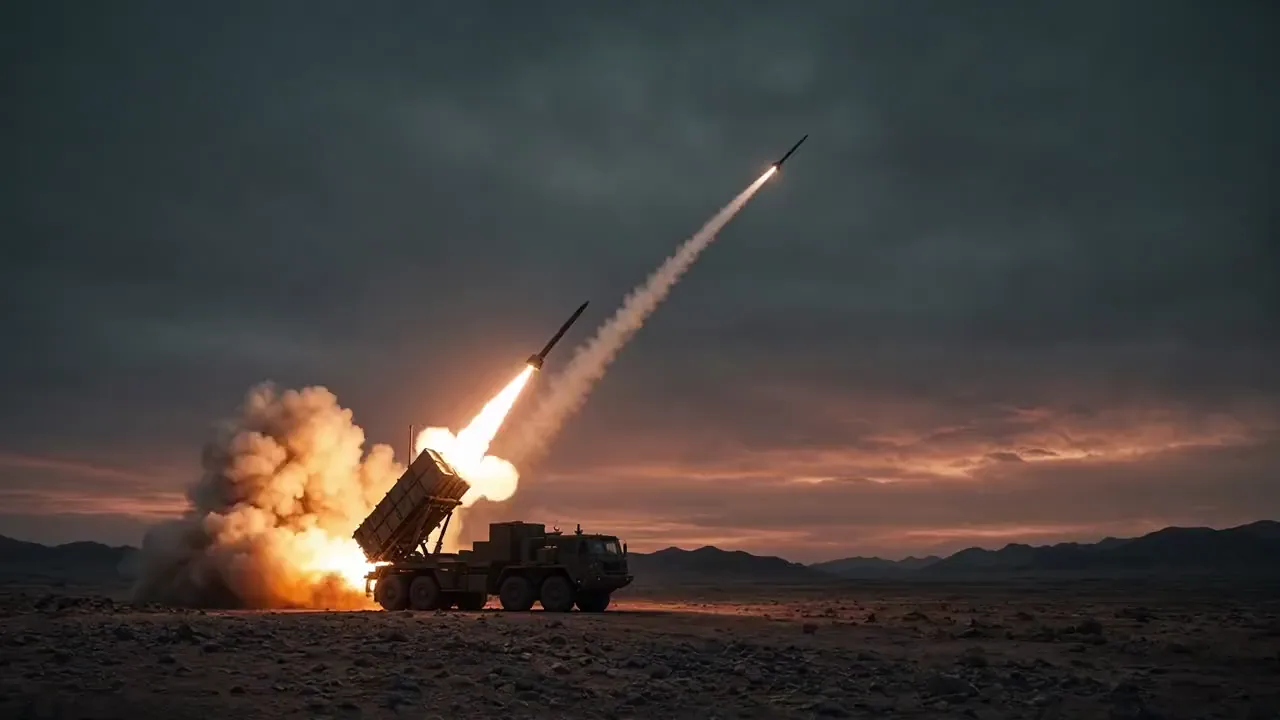
The AIM-7 Sparrow (Air Intercept Missile) is an American medium-range semi-active radar homing air-to-air missile operated by the United States Air Force, United States Navy, United States Marine Corps, and various other air forces and navies. The Sparrow and its derivatives were the West's principal beyond visual range (BVR) air-to-air missile from the late 1950s until the 1990s.

The AIM-7 Sparrow (Air Intercept Missile) is an American medium-range semi-active radar homing air-to-air missile operated by the United States Air Force, United States Navy, United States Marine Corps, and various other air forces and navies. The Sparrow and its derivatives were the West's principal beyond visual range (BVR) air-to-air missile from the late 1950s until the 1990s.
Community
Identity7 fields
- Designation
- AIM-7 Sparrow
- Manufacturer
- Not available
- Country
- United States
- Year
- 1958
- Category
- Air-to-air (AAM)
Performance4 fields
- Range
- 26 km
- Top speed
- AIM-7A/B: Mach 2.5 (1,918 mph, 3,086 kmh, 1,666 kn); AIM-7C/E/F: Mach 4 (3,069 mph, 4,939 kmh, 2,666 kn)
- Guidance
- semi-active radar homing
- Warhead
- High explosive blast-fragmentation; AIM-7C/D/E: 65 pounds (29 kg); AIM-7F/M: 88 pounds (40 kg)
Physical characteristics5 fields
- Launch platform
- Aircraft: McDonnell Douglas F-4 Phantom II; McDonnell Douglas F-15 Eagle; McDonnell Douglas F-15E Strike Eagle; General Dynamics F-16 Fighting Falcon; Grumman F-14 Tomcat; F/A-18 Hornet; JA-37 …
- Diameter
- 200 mm
- Propulsion
- AIM-7A/B/C – Aerojet 1.8KS7800 solid rocket; AIM-7D/E – Rocketdyne MK 38/MK 52 solid rocket; AIM-7F/M/P – Hercules MK-58 solid-propellant rocket motor
- Length
- 3.7 m
- Launch weight
- 230 kg
Data trust
- Reliability
- Partially verified
- Sources
- AIM-7 SparrowWikipedia · Accessed
- Last reviewed
- Confidence level
- Partial. Figures transcribed from the cited Wikipedia article (infobox and lead) on 25 November 2026; not independently audited. Unknown values are left empty and render as —.
Main operators

History
It remains in service, although it is being phased out in aviation applications in favor of the more advanced AIM-120 AMRAAM. Since 2023, the AIM-7 and its RIM-7 variant have seen major operational use in Ukraine, where they have been adapted for use in improvised ground-based air defense systems to intercept cruise missiles and loitering munitions. The early Sparrow was intended primarily for use against larger targets, especially bombers, and had numerous operational limitations in other uses. Against smaller targets, the need to receive a strong reflected radar signal made it difficult to achieve lock-on at the missile's effective range. As the launching aircraft's own radar needed to be pointed at the target throughout the engagement, this meant that in fighter-vs-fighter combat the enemy fighter would often approach within the range of shorter-range infrared homing missiles while the launching aircraft had to continue flying towards its target.
Additionally, early models were only effective against targets at roughly the same or higher altitudes, below which reflections from the ground became a problem. A number of upgraded Sparrow designs were developed to address these issues. In the early 1970s, the RAF developed the Skyflash version with an inverse monopulse seeker and improved motor, while the Italian Air Force introduced the similar Aspide.
ARSENALIS // Research desk
Dossier resources
- Listed · status unspecified
- Active
- Retired
- On order / future
- —No quantity recorded
| Country | Status | Qty | Source |
|---|---|---|---|
| Listed · status unspecified | — | Dossier sources | |
| Listed · status unspecified | — | Dossier sources | |
| Listed · status unspecified | — | Dossier sources | |
| Listed · status unspecified | — | Dossier sources | |
| Listed · status unspecified | — | Dossier sources | |
| Listed · status unspecified | — | Dossier sources | |
| Listed · status unspecified | — | Dossier sources | |
| Listed · status unspecified | — | Dossier sources | |
| Listed · status unspecified | — | Dossier sources | |
| Listed · status unspecified | — | Dossier sources | |
| Listed · status unspecified | — | Dossier sources | |
| Listed · status unspecified | — | Dossier sources |
Quantities are shown only when published in structured operator data; otherwise “—”. Individual service status is unspecified unless explicitly recorded.
Operator list sources
- attributed to AIM-7 Sparrow
Select a country on the map or in the table to see its entry and other catalogued systems listing it as an operator.