G6 howitzer
Country:  South AfricaManufacturer: Denel Land Systems ; Land Systems OMC (chassis) (turret)
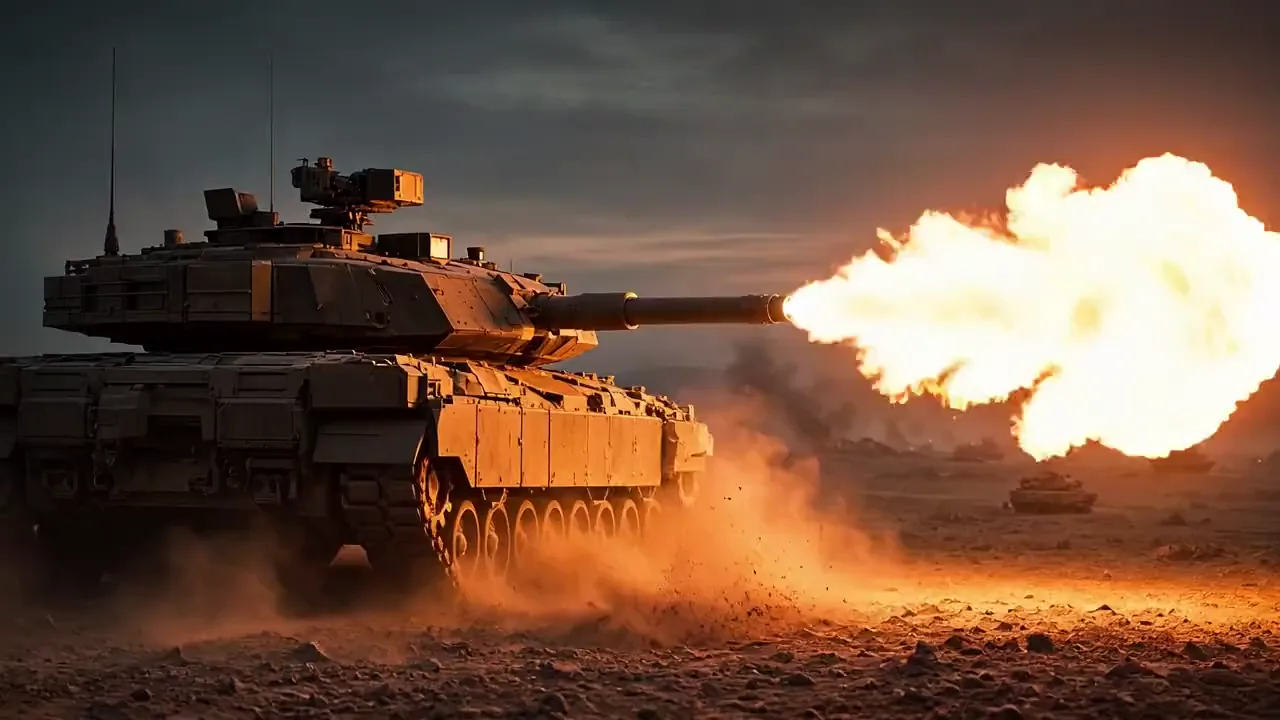
The G6, sometimes denoted as the G6 Rhino, is a South African self-propelled howitzer. It was developed as a turreted, self-propelled variant of the G5 howitzer series, mating the gun to a six-wheeled mine -protected armoured chassis.
Data-only record added 25 November 2026 (Round 13 raw-data expansion). Illustration pending: uses the generic pending placeholder. Text adapted from Wikipedia (CC BY-SA 4.0).
Supplied specifications (Wikipedia infobox, 25 Nov 2026): Type: Self-propelled artillery; Produced: 1988–1999; No. built: 154; Mass: 46 tonnes (51 short tons; 45 long tons ); Length: 9.20 m (30 ft 2 in) (hull); Width: 3.40 m (11 ft 2 in); Height: 3.20 m (10 ft 6 in); Crew: 6; Main armament: 155mm G5 howitzer (47 rounds); Secondary armament: 12.7mm M2 Browning machine gun (900 rounds); Engine: Magirus Deutz Model FL 413 F/FR air-cooled diesel; 525 hp (391 kW); Power/weight: 11.17hp /tonne (8.7 kW/tonne); Suspension: Torsion bar with hydraulic shock dampers; Operational range: 700 km; Maximum speed: 90 km/h (55 mph)
Illustration: Based on reference: https://commons.wikimedia.org/wiki/File:Denel_G6-45_Ysterplaat_Airshow_2006.jpg
Community
Identity4 fields
- Designation
- G6 howitzer
- Manufacturer
- Denel Land Systems ; Land Systems OMC (chassis)
- Country
- South Africa
- Category
- Self-propelled artillery
Production & service3 fields
- Introduced
- 1981
- Status
- In service
- Units produced
- Not available
Specifications11 fields
- Combat weight
- 46 t
- Crew
- 6
- Main armament
- 155mm G5 howitzer (47 rounds)
- Secondary armament
- 12.7mm M2 Browning machine gun (900 rounds)
- Engine
- Magirus Deutz Model FL 413 F/FR air-cooled diesel; 525 hp (391 kW)
Data trust
- Reliability
- Partially verified
- Sources
- G6 howitzerWikipedia · Accessed
- Last reviewed
- Confidence level
- Partial. Figures transcribed from the cited Wikipedia article (infobox and lead) on 25 November 2026; not independently audited. Unknown values are left empty and render as —.

Historical profile
Design work on the G6 began in the late 1970s to replace the obsolescent Sexton being retired from service with the artillery regiments of the South African Army. Serial production commenced between 1988 and 1999. At the time of its introduction, the G6 was considered one of the most mobile self-propelled howitzers in service. Its chassis was engineered to be mine-resistant and blastproof, allowing it to survive multiple TM-46 detonations during trials.
The G6 was conceived as a wheeled rather than a tracked vehicle for this purpose, as well as to allow it to deploy long distances by road without consuming excessive quantities of fuel or requiring a tank transporter. G6s entered service during the last two years of the South African Border War, frequently shelling positions held by the People's Armed Forces for the Liberation of Angola (FAPLA) during the Battle of Cuito Cuanavale. Their ability to bombard a target and change positions rapidly in less than two minutes, with minimal preparation, greatly reduced the threat posed by retaliatory Angolan air raids and counter-battery fire.
Related systems
ARSENALIS // Research desk
Dossier resources
- Listed · status unspecified
- Active
- Retired
- On order / future
- —No quantity recorded
No structured operator list recorded. Country of origin is not treated as an operator.
Quantities are shown only when published in structured operator data; otherwise “—”. Individual service status is unspecified unless explicitly recorded.
Operator list sources
- attributed to G6 howitzer
Select a country on the map or in the table to see its entry and other catalogued systems listing it as an operator.