
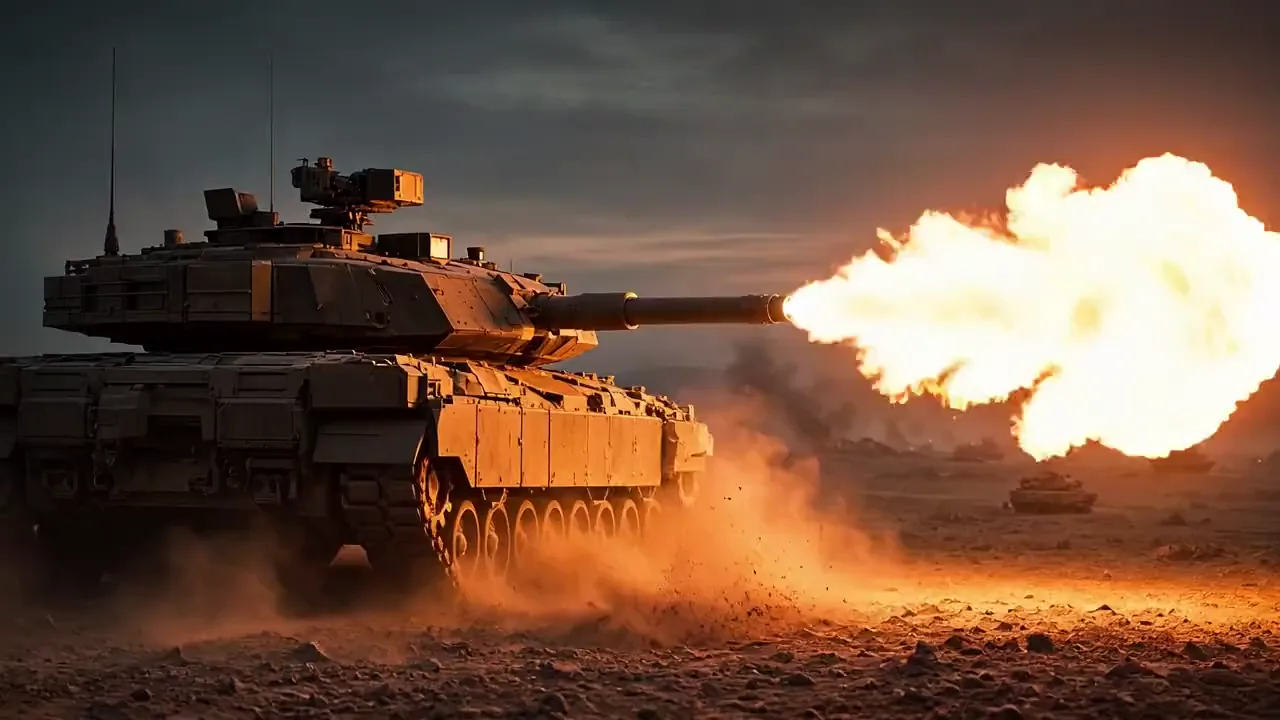
2S9 Nona-S
Country: Soviet UnionManufacturer: Motovilikha Plants (Perm)
Amphibious, air-droppable tracked 120 mm breech-loading self-propelled gun-mortar (*2S9 Nona-S*) built on a lengthened BTR-D airborne chassis, capable of firing both 120 mm mortar bombs and rifled artillery shells in direct or indirect fire roles.
Service dates: 1981 (In service) – 1989 (Production ended)
Supplied specifications (Batch 3, 18 Nov 2026): Crew: 4; Combat Weight: ~8.7 tonnes (air-droppable); Main Armament: 120 mm 2A51 rifled gun-mortar (25–40 rounds carried); Firing Range: 8.8 km (standard mortar bomb); 12.8 km (rocket-assisted projectile); Engine / Speed: 5D20 240 hp V6 diesel; 60 km/h road speed (9 km/h amphibious)
Data trust — Partial: Motovilikha manufacture, 1981 service entry, 8.7-tonne air-droppable weight, 120 mm 2A51 gun-mortar, and 8.8–12.8 km range: Verified against cited historical sources. Exact current active counts: Unverified (—).
Illustration: Based on reference: https://upload.wikimedia.org/wikipedia/commons/f/fe/ParkPatriot2015part11-150.jpg
Community
Identity4 fields
- Designation
- 2S9 Nona-S
- Manufacturer
- Motovilikha Plants
- Country
- Soviet Union
- Category
- Self-propelled artillery
Production & service3 fields
- Introduced
- 1981
- Status
- In service
- Units produced
- —
Specifications11 fields
- Combat weight
- —
- Crew
- 4
- Main armament
- 120 mm 2A51 rifled gun-mortar (25–40 rounds carried)
- Secondary armament
- —
- Engine
- 5D20 240 hp V6 diesel
Data trust
- Reliability
- Partially verified
- Sources
- 2S9 NonaWikipedia · Accessed
- Last reviewed

Historical profile
Entering Soviet Airborne Forces (*VDV*) service in 1981 and proven in combat during the Soviet–Afghan War, Chechen Wars, and Russo-Ukrainian War, the Nona gun-mortar system also spawned wheeled derivatives (2S23 Nona-SVK on BTR-80) and towed versions (2B16 Nona-K).
