2S3 Akatsiya
Country: Soviet UnionManufacturer: Uraltransmash
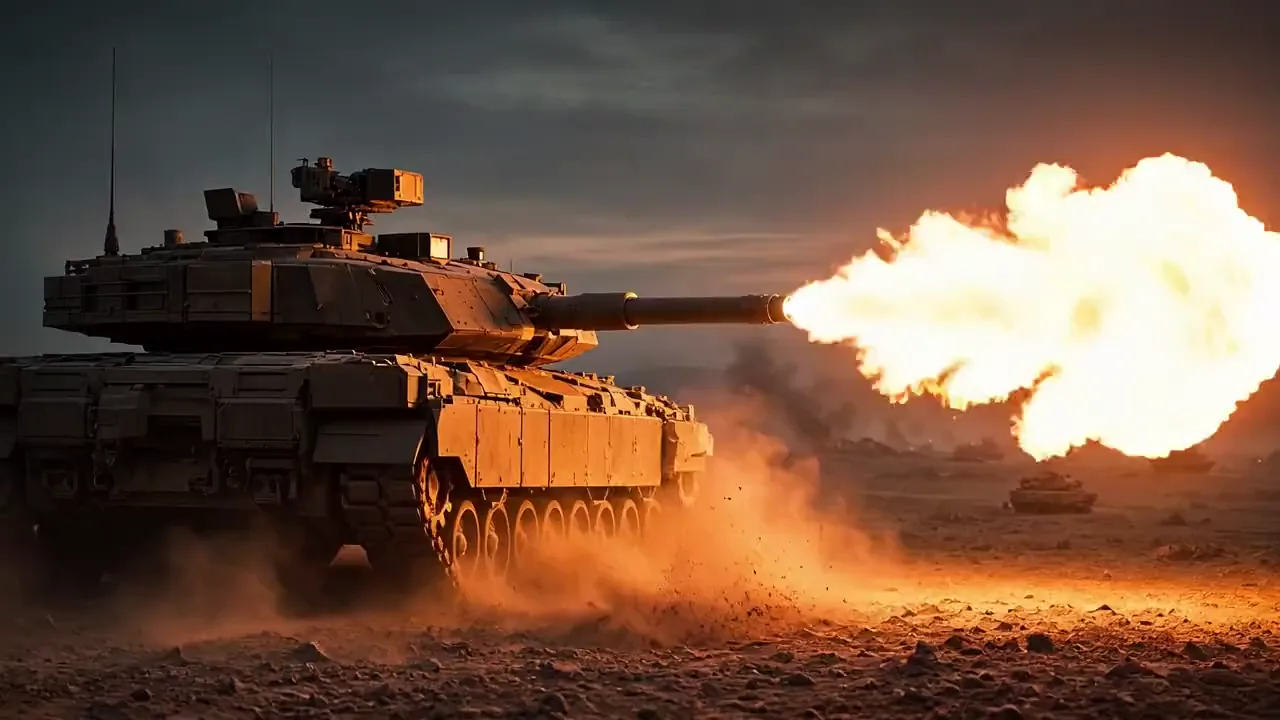
Tracked 152.4 mm self-propelled howitzer (*2S3 "Acacia"*) developed by the Soviet Union in response to the U.S. M109, mounting a 152 mm 2A33 howitzer in a rotating turret on a modified GM-123 tracked chassis.
Service dates: 1971 (In service) – 1993 (Production ended)
Supplied specifications (Batch 2, 18 Nov 2026): Crew: 4; Combat Weight: ~27.5 tonnes; Main Armament: 152.4 mm 2A33 howitzer (46 rounds carried); Firing Range: 18.5 km (standard HE); 24 km (rocket-assisted projectile); Engine / Speed: V-59 520 hp V12 diesel; 60 km/h road speed
Data trust — Partial: Uraltransmash manufacture, 1971 service entry, >4,000 production scale, 152.4 mm 2A33 gun, and 18.5–24 km range: Verified against cited historical sources. Exact surviving global operator counts: Unverified (—).
Illustration: Based on reference: https://upload.wikimedia.org/wikipedia/commons/a/ac/2S3_Akatsiya_3261.jpg
Community
Identity4 fields
- Designation
- 2S3 Akatsiya
- Manufacturer
- Uraltransmash
- Country
- Soviet Union
- Category
- Self-propelled artillery
Production & service3 fields
- Introduced
- 1971
- Status
- In service
- Units produced
- —
Specifications11 fields
- Combat weight
- 27.5 t
- Crew
- 4
- Main armament
- 152.4 mm 2A33 howitzer (46 rounds carried)
- Secondary armament
- —
- Engine
- V-59 520 hp V12 diesel
Data trust
- Reliability
- Partially verified
- Sources
- 2S3 AkatsiyaWikipedia · Accessed
- Last reviewed

Historical profile
Entering Soviet service in 1971 and produced in over 4,000 units, the 2S3 Akatsiya became the standard divisional self-propelled artillery system of Soviet and Warsaw Pact tank and motor rifle divisions, seeing combat in Afghanistan, Chechnya, Iraq, Syria, and Ukraine.