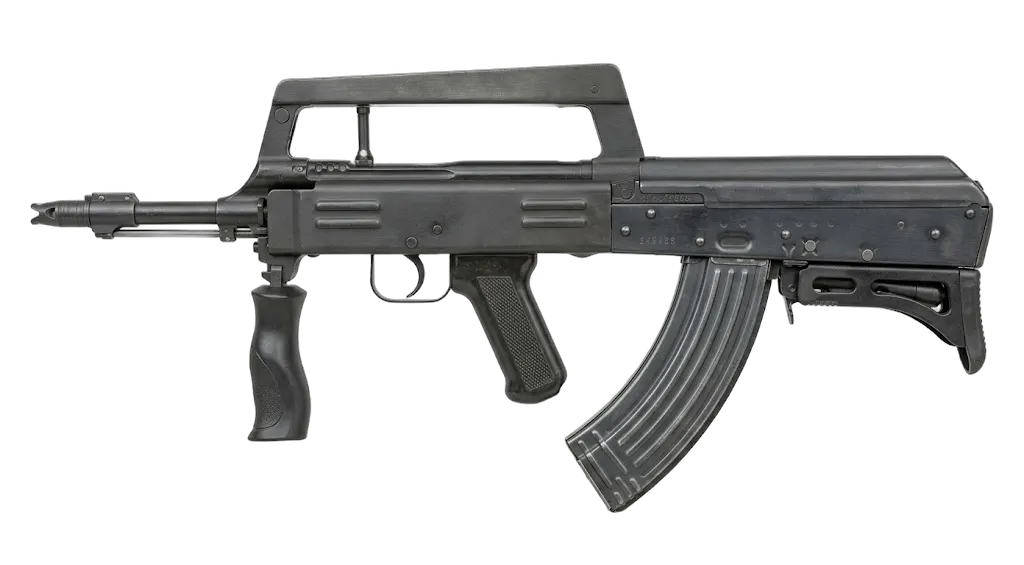
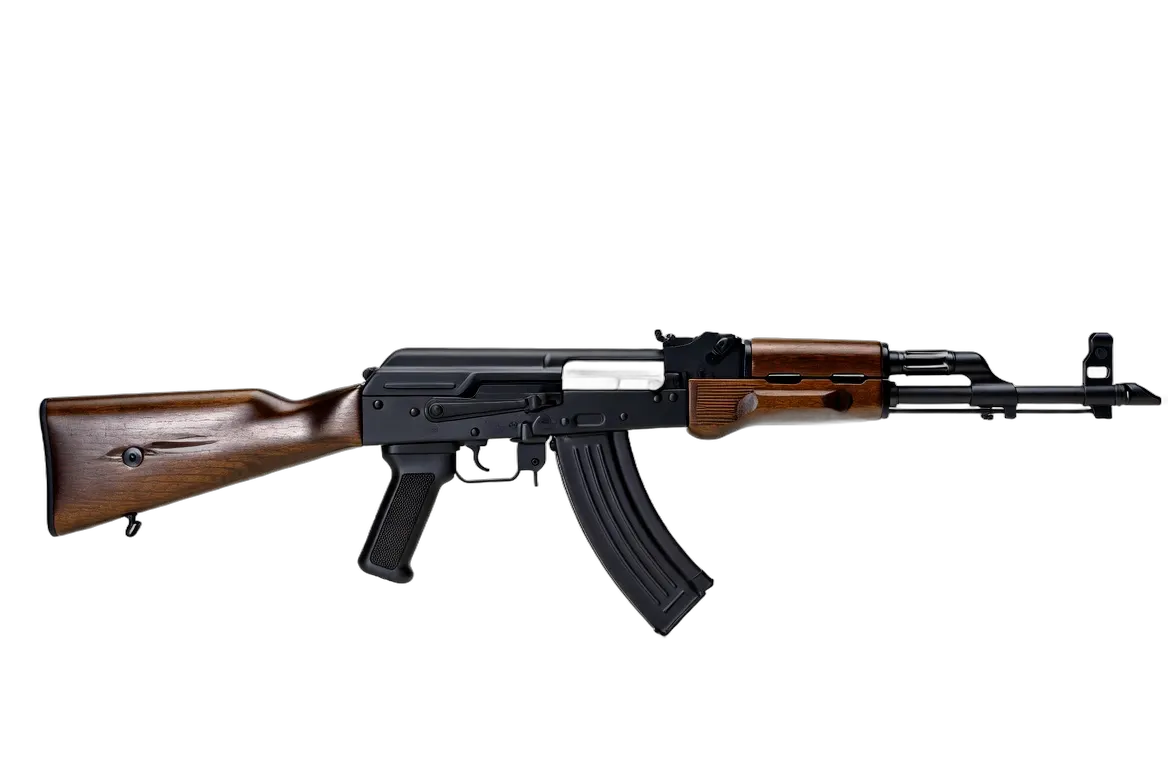
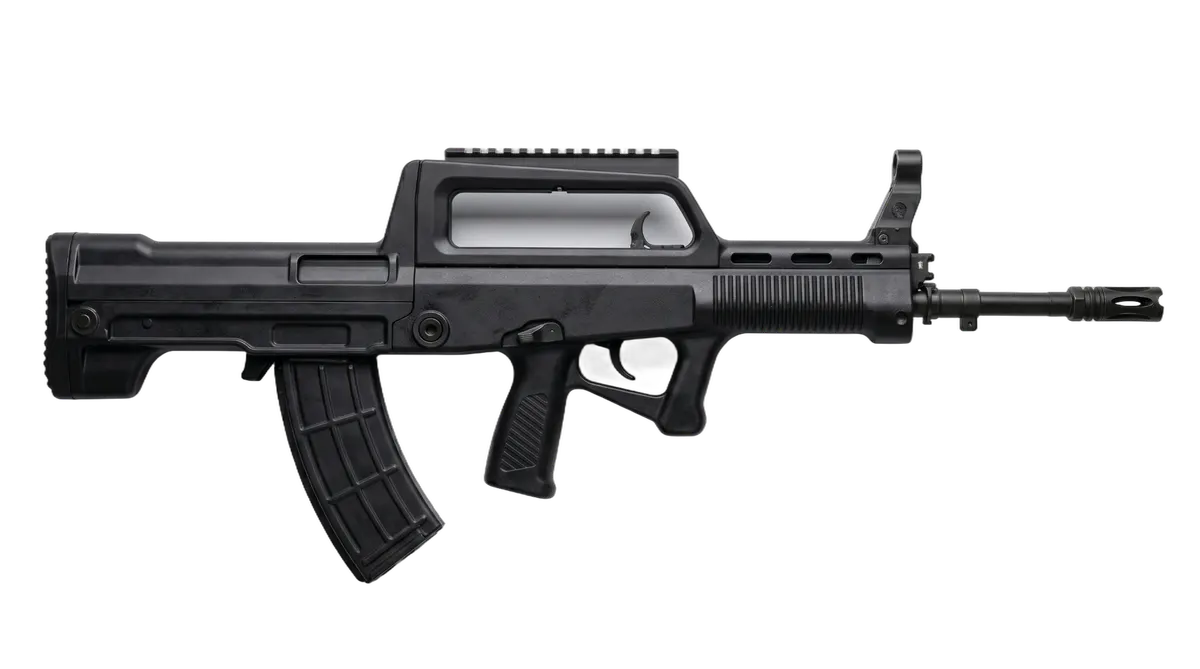
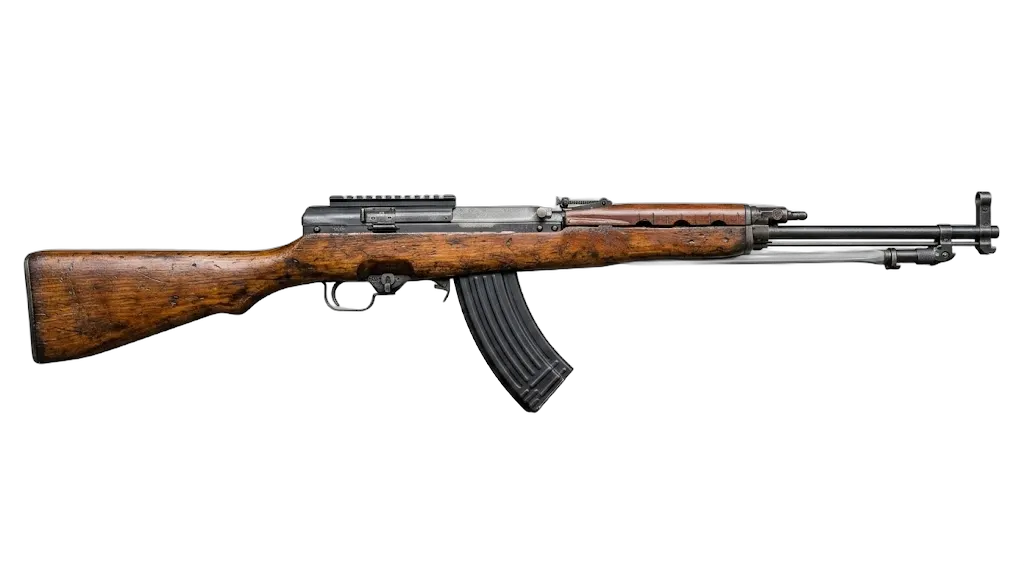
Type 81
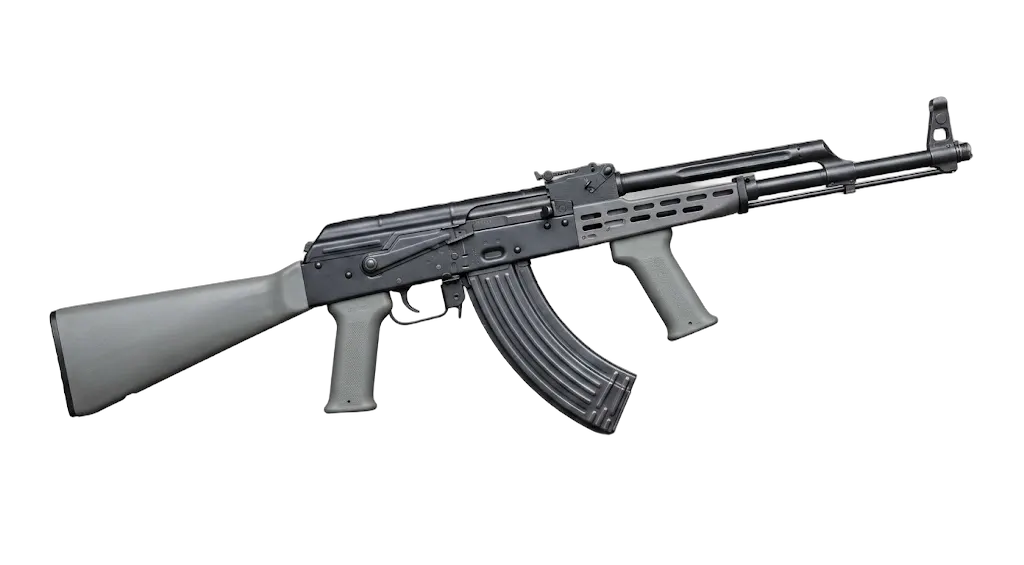
Chinese assault rifle from the 1980s blending the SKS operating system with AK ergonomics: superior accuracy compared to the Type 56 and a cyclic rate tuned for aimed fire.
Type 81
Community
Data trust
- Reliability
- Unverified
- Sources
- Sources pending review
Identity
- Designation
- Type 81
- Alias
- QBZ-81
- Manufacturer
- Norinco
- Country
- China
- Year
- 1983
- Category
- Assault rifle
- Status
- Historic
Ballistics
- Caliber
- 7.62×39 mm
- Muzzle velocity
- 720 m/s
- Rate of fire
- ~700 rpm
- Effective range
- 400 m
- Maximum range
- 800 m
Dimensions
- Barrel length
- 445 mm
- Overall length
- 955 mm
- Empty weight
- 3.4 kg
Mechanics
- Operating system
- Gas-operated, short-stroke piston
- Bolt / action
- Rotating bolt
Feed
- System
- Curved double-stack magazine
- Standard capacity
- 30 rounds
Fire modes
Historical profile
Development
After the not fully satisfactory experience of the Type 63 (an SKS/AK hybrid with detachable magazine and full-auto fire), China launched in the late 1970s the development of an entirely new assault rifle capable of overcoming the Type 56's accuracy limitations.
The project was led by Norinco engineers under Wang Zhijun's direction. The weapon was officially adopted in 1983 as the QBZ-81, where QBZ stands for Qīng Bùqiāng Zìdòng ("light automatic rifle").
Design
Chambered in 7.62×39 mm, it adopts a short-stroke gas-piston system separated from the bolt carrier (SKS-style), which reduces reciprocating mass compared to the AK and improves aimed-fire accuracy.
It retains a receiver and rotating bolt derived from the Kalashnikov family, ensuring reliability and ease of maintenance. The cyclic rate is reduced to about 700 rpm and the rear sight is an aperture adjustable up to 500 m.
Operational service
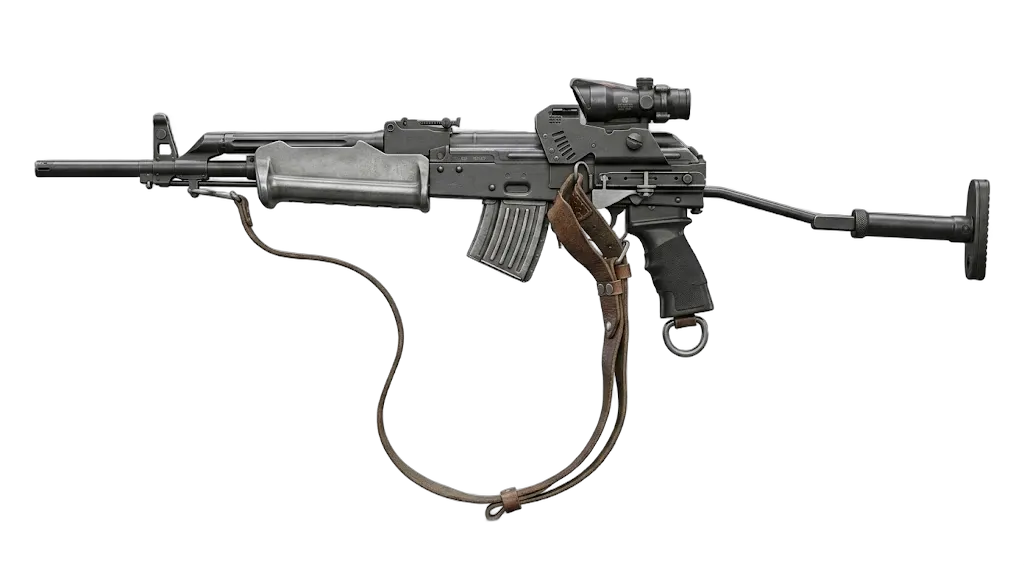
Issued to the PLA from 1983, it replaced the Type 56 in front-line units. It was also produced in the Type 81-1 variant with a triangular folding metal stock and as the Type 81 LMG squad weapon, with heavy barrel and integral bipod.
It saw operational use in the Sino-Vietnamese War (particularly in the border skirmishes of the 1980s) and has been exported to Sri Lanka, Myanmar, Bangladesh, Nepal and various African countries; it has recently appeared also in the hands of irregular forces in the Middle East.
Legacy
Although officially replaced by the QBZ-95 bullpup from 1995, the Type 81 remains in service in Chinese reserves, militia and paramilitary forces, and in second-line units thanks to its reliability and training familiarity.
In recent years semi-automatic civilian variants of the Type 81 have been imported into Canada and other markets, where they are valued for superior accuracy compared to conventional AKs.
Variants
Main users
China · Sri Lanka · Myanmar · Bangladesh · Nepal
Key components
- ●Stock — Shoulder rest.
- ●Receiver — Weapon body with internal mechanisms.
- ●Grip — Primary grip.
- ●Magazine — Cartridge feed.
- ●Barrel — Guides the projectile.