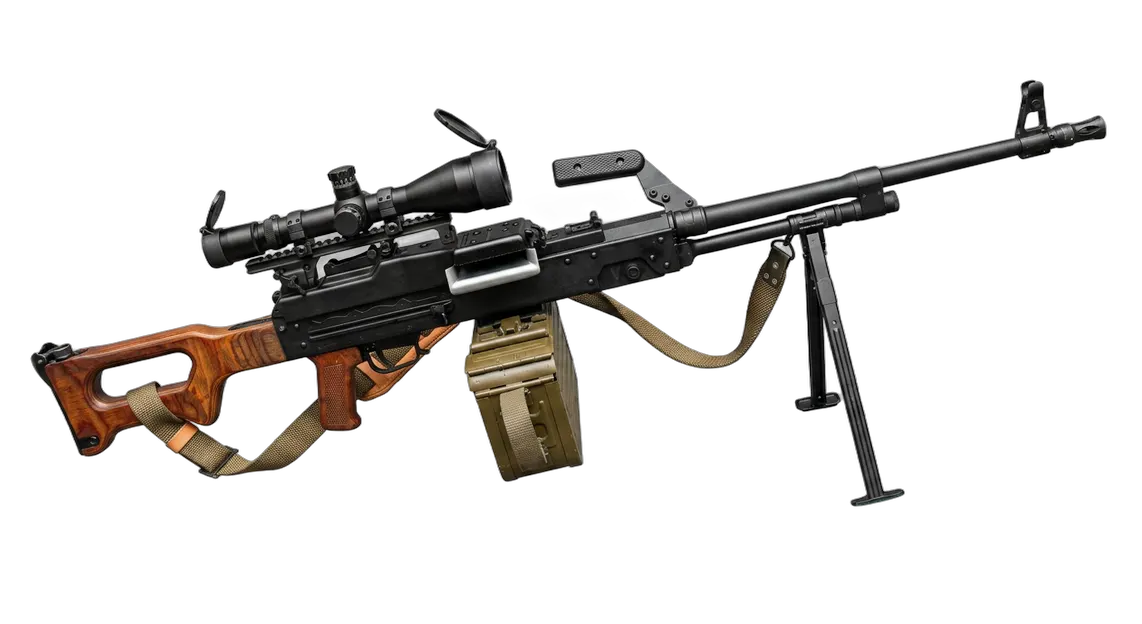
M240
7.62×51 NATO general-purpose machine gun derived from the FN MAG 58: NATO standard on vehicles and tripods, replacing the M60 in U.S. Army and USMC service.
M240
Community
Data trust
- Reliability
- Unverified
- Sources
- Sources pending review
Identity
- Designation
- M240
- Alias
- FN MAG 58
- Manufacturer
- FN Herstal
- Country
- Belgium
- Year
- 1977
- Category
- Medium machine gun
- Status
- In service
Ballistics
- Caliber
- 7.62×51 mm NATO
- Muzzle velocity
- 905 m/s
- Rate of fire
- ~750 rpm
- Effective range
- 1800 m
- Maximum range
- 3725 m
Dimensions
- Barrel length
- 630 mm
- Overall length
- 1245 mm
- Empty weight
- 12.5 kg
Mechanics
- Operating system
- Gas-operated, long-stroke piston
- Bolt / action
- Tilting bolt
Feed
- System
- 7.62 NATO disintegrating belt
- Standard capacity
- undefined rounds
Fire modes
Historical profile
Development and War Origins
The genesis of the FN MAG lies in Ernest Vervier's ambitious project at Fabrique Nationale in Herstal, aimed at creating a general-purpose machine gun that combined the best concepts from the Second World War. The feeding mechanism was derived directly from the German MG42, while the locking system and trigger group were inspired by the proven Browning M1918 Automatic Rifle (BAR).
In the 1970s, the United States Army initiated a series of comparative tests to find a more reliable alternative to the M60 and the ill-fated M219 for armored use. The FN MAG triumphed in reliability trials, leading to its official adoption by the U.S. Army in 1977 under the designation M240, initially configured only for coaxial use on M60 tanks and later on the new M1 Abrams.
Mechanical Architecture and Design
The weapon is distinguished by a stamped steel receiver with rivets, designed to withstand prolonged firing cycles without structural deformation. The gas-operated system features a three-position regulator that allows the operator to increase the rate of fire or compensate for carbon buildup and adverse environmental conditions.
The M240 series introduces specific American modifications, such as the perforated heat shield on infantry models and the integration of MIL-STD-1913 Picatinny rails for the installation of day and night optics. The barrel features a chrome-lined bore and can be quickly replaced using a carrying handle, ensuring continuity of fire during overheating in combat.
Operational Service and Variants
Although introduced in 1977, mass distribution among infantry occurred only in the 1990s with the Ground Machine Gun program, which led to the birth of the M240B for the Army and the M240G for the Marine Corps. These versions demonstrated overwhelming superiority in the conflicts in Iraq and Afghanistan, where the weapon earned the trust of soldiers for its ability to operate in desert and dusty environments.
Beyond ground use on the M122A1 tripod or integrated bipod, the M240 has become the standard weapon for close-in defense on helicopters such as the UH-60 Black Hawk and CH-47 Chinook under the M240H designation. Its versatility allows it to be mounted on almost any mobile platform, from small JLTV light vehicles to U.S. Coast Guard patrol boats.
Modern Evolution and Legacy
The most recent evolution is represented by the M240L (Lightweight), which reduces overall weight by approximately two kilograms through the use of titanium in the receiver construction and advanced polymers. This variant responds to the needs of light infantry and airborne troops, maintaining the same lethality and reliability as the standard steel model.
To date, the FN MAG and its M240 derivative remain the global benchmark for 7.62mm medium machine guns, with over eighty user countries and a production exceeding hundreds of thousands of units. Despite the emergence of new calibers and technologies, its internal architecture remains unsurpassed for consistency of performance, consolidating its status as an iconic weapon of the modern era.
Variants
Main users
United States · United Kingdom (L7) · Canada (C6) · Belgium · over 80 countries
Key components
- ●Stock — Fixed polymer stock.
- ●Receiver — Stamped steel housing with Picatinny rail.
- ●Grip — Polymer pistol grip.
- ●Magazine — Alimentazione nastro disintegrante 7.62 NATO.
- ●Barrel — Quick-change barrel with carry handle.
Community
Recent reviews
Similar systems
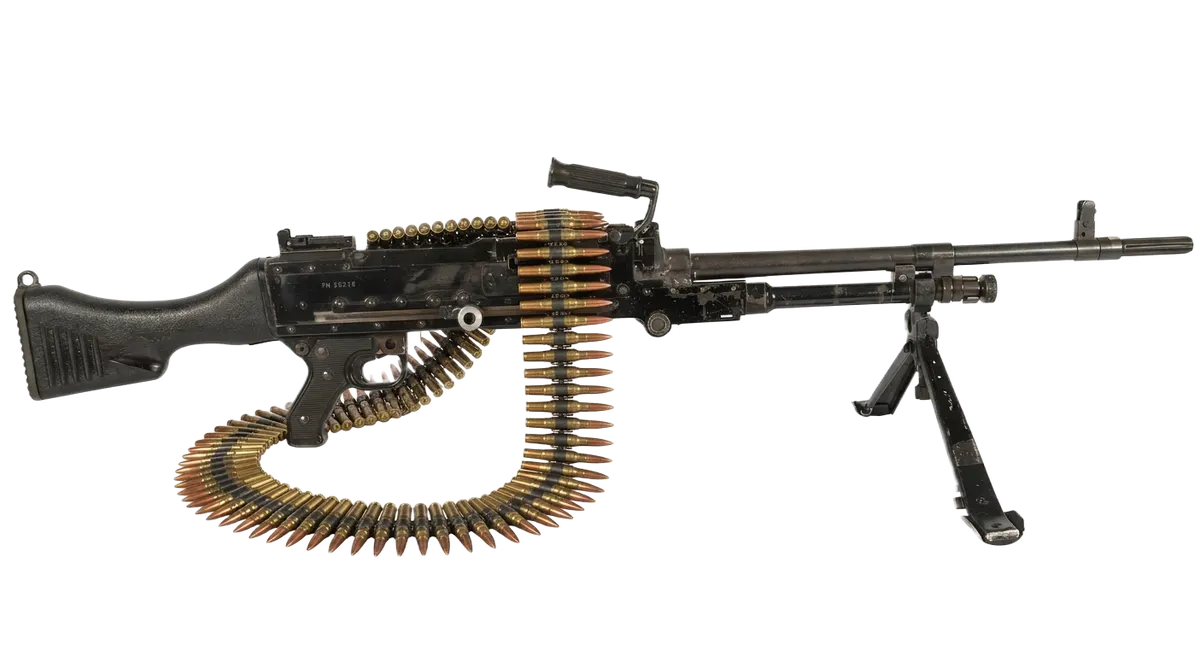
FN MAG
1958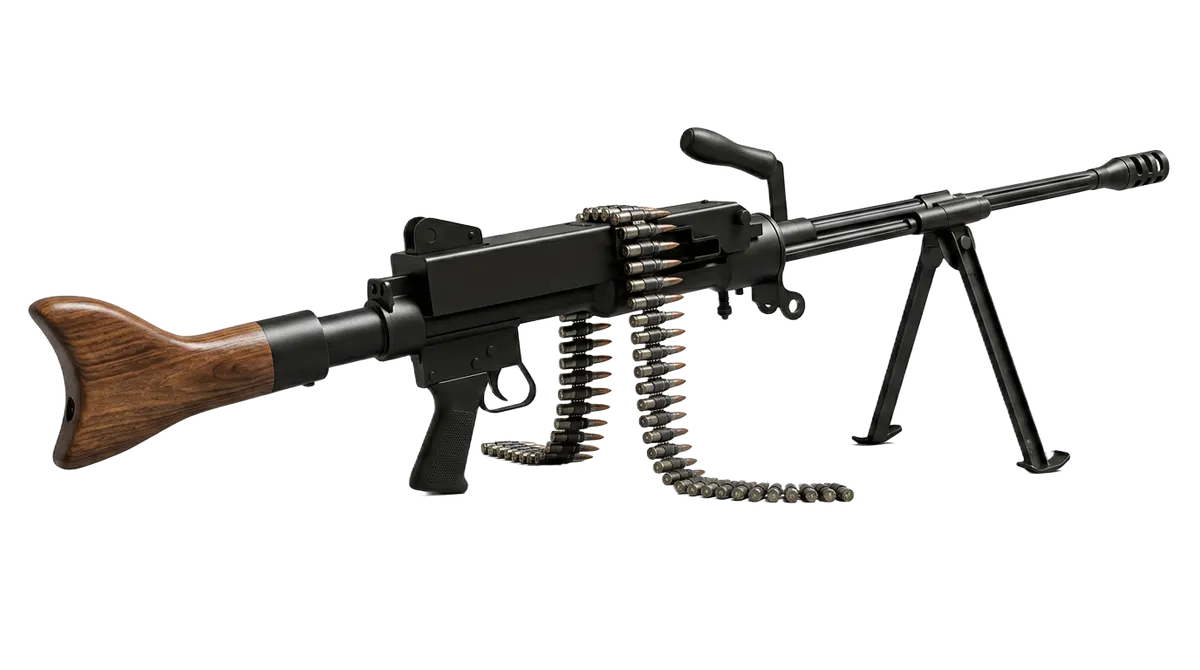
Mekanika Uirapuru
1975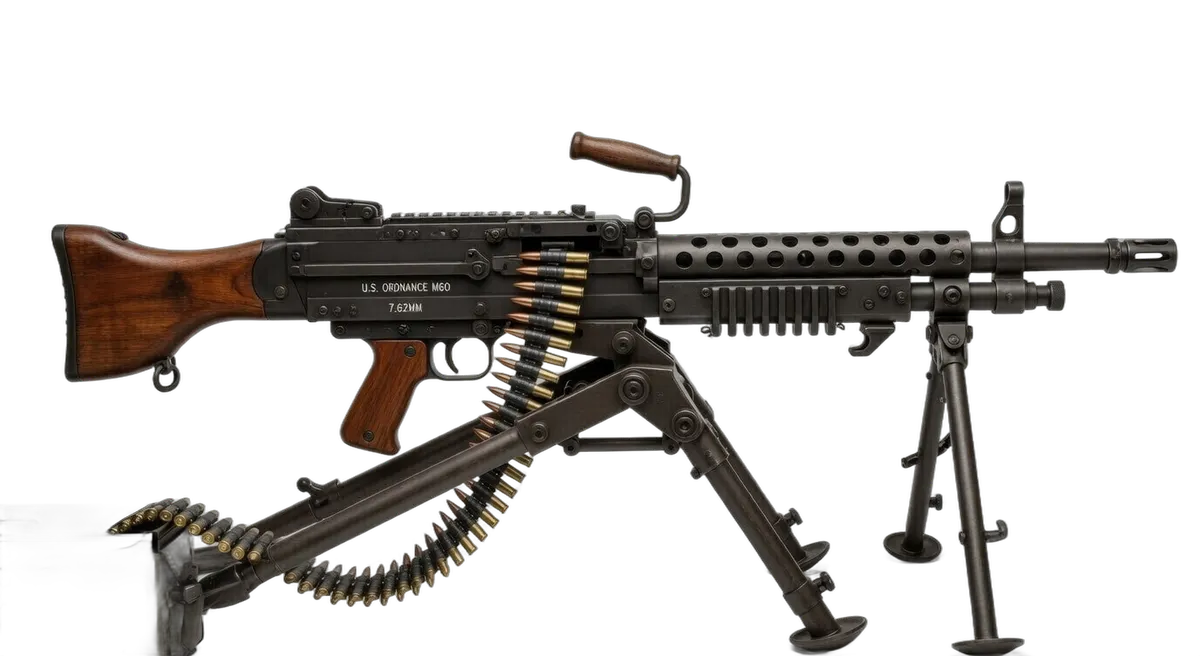
U.S. Ordnance M60
1957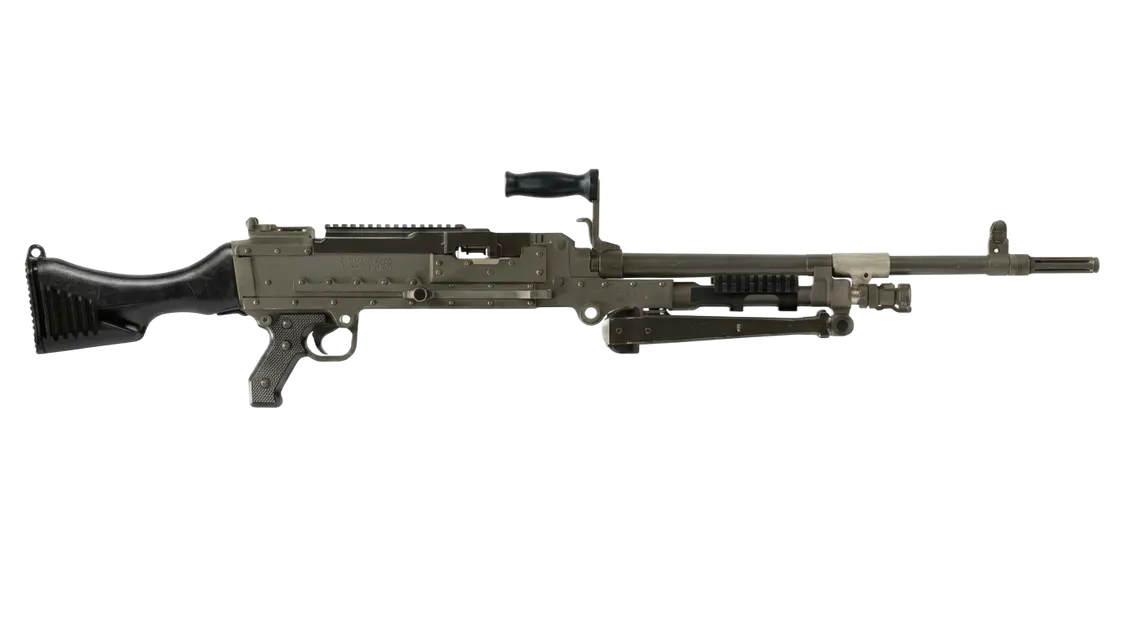
C6
1977
Type 67 GPMG
1967