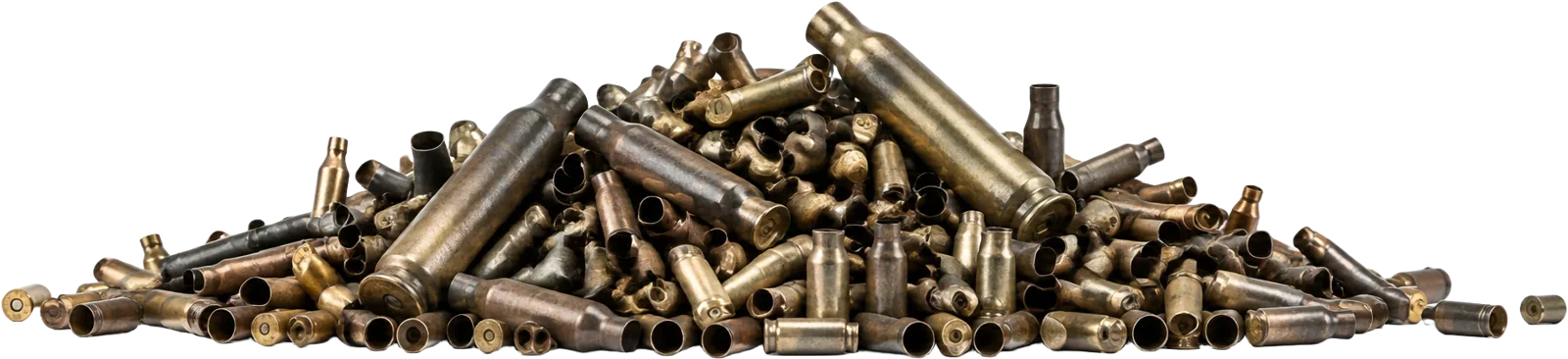

.223 Remington
Highly popular commercial intermediate rifle cartridge serving as the foundational parent to 5.56×45mm NATO.
- Designation
- —
- Standard
- —
- Origin
- —
- Introduced
- 1962
Community
Technical overview
Employs a rimless, bottlenecked brass casing holding lightweight, high-velocity .224-inch spitzer projectiles. Terminal behavior relies on high rotational velocity and hydrostatic shock, yielding tumbling and fragmentation upon impact in soft tissue.
Strengths & limitations
- + Flat trajectory and high accuracy across target and varmint applications.
- + Mild recoil profile enabling rapid, controlled fire.
- + Extensive commercial reloading support and market availability.
- − Firing high-pressure 5.56 NATO rounds in SAAMI .223 chambers can cause unsafe pressure spikes.
- − Reduced penetration performance against hard barrier obstacles compared to full-power rifle calibers.
Ballistics & dimensions
- Bullet diameter
- 5.70 mm (0.224 in)
- Case length
- 44.70 mm (1.760 in)
- Overall length
- 57.40 mm (2.260 in)
- Bullet weight
- 2.6–5.0 g (40–77 gr)
- Muzzle velocity
- 990 m/s (3,250 ft/s)
- Energy
- 1,780 J (1,313 ft·lbf)
- Max pressure
- 3,800 bar (55,114 psi)
- Typical twist rate
- —
Military variants & loadings
No variants recorded yet.
Weapons in the catalog using it (0)
Platforms: AR-15, Ruger Mini-14, Remington Model 700, CZ 600, Tikka T3x
Related cartridges: 5.56×45 mm NATO, .222 Remington, .224 Valkyrie, 22-250 Remington
Data trust: Verified (CIP / SAAMI / Official Military Ordnance Specifications)
Doctrine & history
Developed by Remington Arms and ArmaLite in the late 1950s for the U.S. Continental Army Command small-caliber high-velocity rifle program. Formally released to the commercial market in 1962, it served as the direct precursor to the standardized 5.56×45mm NATO military cartridge.