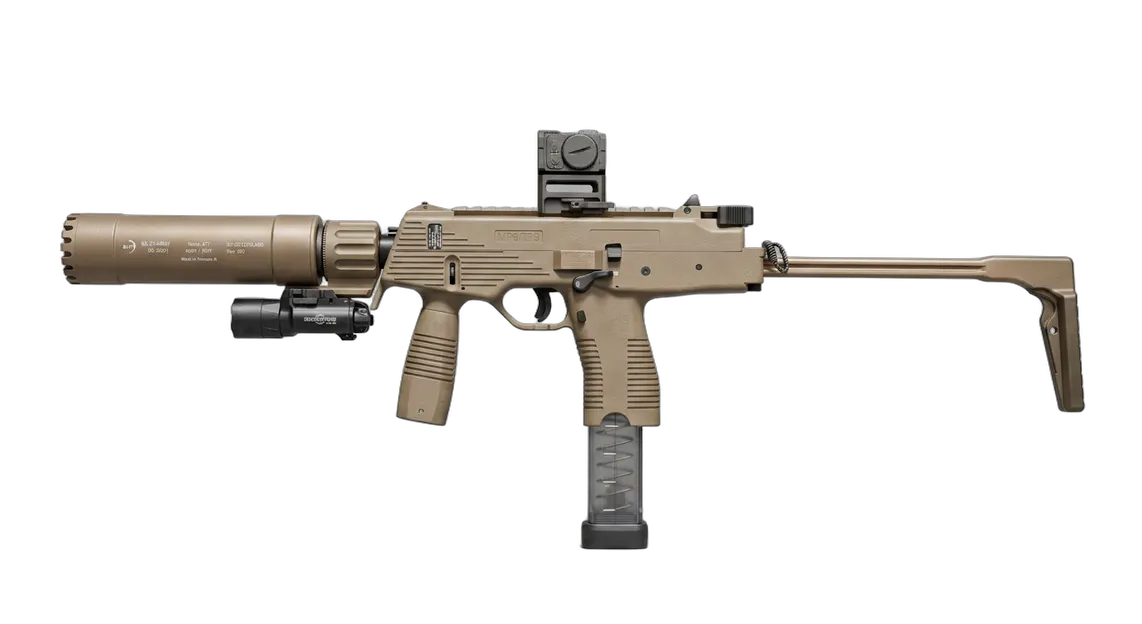
SR-2 Veresk
Country:  RussiaManufacturer: TsNIITochMash
Russian 9×21 mm SP-10/SP-11 submachine gun developed by TsNIITochMash for the FSB and Spetsnaz units. High rate of fire, metal stock folding over the receiver and the ability to defeat heavy body armour.
SR-2 Veresk
Community
Data trust
- Reliability
- Unverified
- Sources
- Sources pending review
Identity
- Designation
- SR-2 Veresk
- Alias
- СР-2 «Вереск»
- Manufacturer
- TsNIITochMash
- Country
- Russia
- Year
- 1999
- Category
- Submachine gun
- Status
- In service
Ballistics
- Caliber
- 9×21 mm SP-10/SP-11
- Muzzle velocity
- 415 m/s
- Rate of fire
- ~900 rpm
- Effective range
- 200 m
Dimensions
- Barrel length
- 172 mm
- Overall length
- 367 / 603 mm
- Empty weight
- 1.9 kg
Mechanics
- Operating system
- Presa di gas a pistone corto
- Bolt / action
- Rotating bolt
Feed
- System
- Caricatore bifilare amovibile
- Standard capacity
- 20 rounds
Fire modes
Historical profile
Development and Strategic Genesis
The genesis of the SR-2 Veresk dates back to the mid-1990s, when TsNIITochMash in Klimovsk was commissioned by the Russian security services (FSB) to create a close-quarters weapon superior to traditional 9x18 mm submachine guns. The primary objective was to neutralize targets equipped with new individual protection standards such as Kevlar or titanium plates, common among paramilitaries during the Chechen conflicts.
Under the leadership of designer Nikolay Belevtsev, the engineering team focused development on the special 9x21 mm ammunition already used in the SR-1 Gyurza pistol, aiming to integrate the penetration power of an anti-ballistic cartridge into an extremely compact package. The project was finalized in 1999, standing out as a specific domestic solution for high-intensity urban combat requirements.
Mechanics and Technical Characteristics
Unlike most submachine guns that utilize a blowback operation, the Veresk employs a gas-operated system with a rotating bolt derived from the SR-3 Vikhr assault rifle design. This configuration, unusual for its category, ensures excellent accuracy and stable handling of the high pressures generated by the SP-10 armor-piercing cartridge, which features a hardened steel core.
The pistol grip contains the magazine well, while the upper section houses a stamped metal stock that folds upward over the receiver cover, reducing the overall length to just 367 millimeters. Later variants, such as the SR-2M, introduced a folding vertical foregrip and a Picatinny rail for KP-SR2 reflex sights, optimizing the weapon for rapid instinctive shooting.
Operational Service and User Units
The official adoption of the SR-2 occurred in 1999 to meet the urgent needs of the Alpha and Vympel elite units engaged in counter-terrorism operations in Caucasian and urban territories. The ability to penetrate a Class 2 bulletproof vest at a range of 100 meters made the weapon an indispensable tool for Russian rapid response teams, offering lethality previously reserved for 5.45 mm assault rifles.
In addition to the FSB, the Veresk was issued to the SOBR and OMON units of the Ministry of Internal Affairs (MVD) and GRU Spetsnaz detachments, seeing extensive use during the Dubrovka theater siege and numerous covert operations in the North Caucasus. Although its high rate of fire of 900 rounds per minute makes it difficult for untrained shooters to control, its effectiveness in close-quarters battle remains unmatched among weapons of its size.
Evolution and Military Legacy
The legacy of the SR-2 lies in surpassing the traditional concept of the 9 mm submachine gun, positioning itself as a technological bridge between the Western PDW and the compact assault rifle. The introduction of the SR-2MP version further modernized the platform, adding side mounts for laser designators and flashlights, along with the provision for a quick-detach suppressor, making it a complete modular system for modern special forces.
Although more recent weapons have been introduced in the TsNIITochMash catalog, the Veresk remains in active service and continues to be produced to meet the demand of Russian security agencies. Its influence is visible in the Russian doctrine of using high-performance calibers for close combat, solidifying the role of 9x21 mm ammunition as the standard for defeating protected targets in complex tactical environments.
Variants
Main users
Russia (FSB Alfa/Vympel, GRU Spetsnaz, MVD)
Key components
- ●Stock — Shoulder rest.
- ●Receiver — Weapon body with internal mechanisms.
- ●Grip — Primary grip.
- ●Magazine — Cartridge feed.
- ●Barrel — Guides the projectile.
Community
Recent reviews
Similar systems
PP-19-01 Vityaz
2004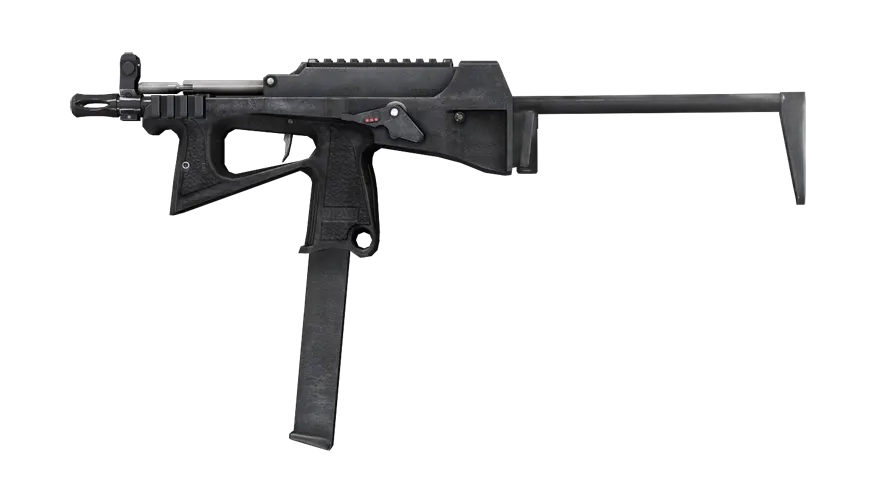
PP-2000
2006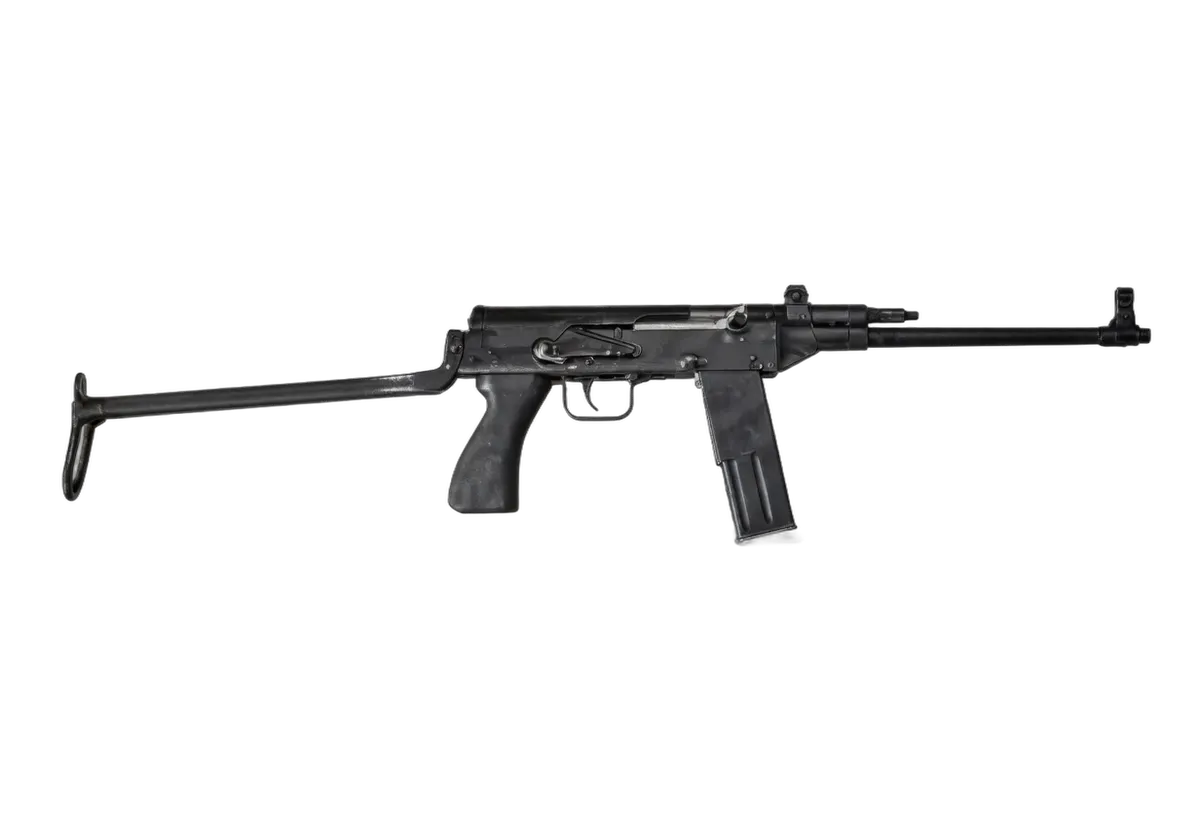
Type 79
1979
KGP-9
1989
Minebea PM-9
1990